Walking the Kiso Road: A Modern-Day Exploration of Old Japan, by William Scott Wilson
Be the very first to purchase this book now and obtain all reasons why you should read this Walking The Kiso Road: A Modern-Day Exploration Of Old Japan, By William Scott Wilson The e-book Walking The Kiso Road: A Modern-Day Exploration Of Old Japan, By William Scott Wilson is not just for your tasks or requirement in your life. E-books will always be a good pal in every single time you read. Now, allow the others find out about this web page. You could take the advantages and share it likewise for your good friends as well as people around you. By this way, you can actually get the meaning of this book Walking The Kiso Road: A Modern-Day Exploration Of Old Japan, By William Scott Wilson profitably. Exactly what do you consider our suggestion here?
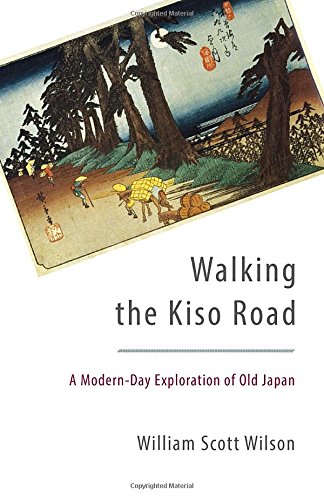
Walking the Kiso Road: A Modern-Day Exploration of Old Japan, by William Scott Wilson

Free PDF Ebook Walking the Kiso Road: A Modern-Day Exploration of Old Japan, by William Scott Wilson
Step back into old Japan in this fascinating travelogue of the famous Kiso Road, an ancient route used by samurai and warlords, which remains much the same today as it did hundreds of years ago. Take a trip to old Japan with William Scott Wilson as he travels the ancient Kiso Road, a legendary route that remains much the same today as it was hundreds of years ago. The Kisoji, which runs through the Kiso Valley in the Japanese Alps, has been in use since at least 701 C.E. In the seventeenth century, it was the route that the daimyo (warlords) used for their biennial trips—along with their samurai and porters—to the new capital of Edo (now Tokyo). The natural beauty of the route is renowned—and famously inspired the landscapes of Hiroshige, as well as the work of many other artists and writers. Wilson, esteemed translator of samurai philosophy, has walked the road several times and is a delightful and expert guide to this popular tourist destination; he shares its rich history and lore, literary and artistic significance, cuisine and architecture, as well as his own experiences.
Walking the Kiso Road: A Modern-Day Exploration of Old Japan, by William Scott Wilson- Amazon Sales Rank: #322209 in Books
- Published on: 2015-10-13
- Released on: 2015-10-13
- Original language: English
- Number of items: 1
- Dimensions: 8.60" h x .70" w x 5.60" l, 1.25 pounds
- Binding: Paperback
- 288 pages
Review “A gemlike book, brimming with sharp insights on the way Japan’s ancient past continues to inform its present. . . . A carefully observed and sagacious travelogue.”—New York Times Book Review
About the Author WILLIAM SCOTT WILSON is the foremost translator into English of traditional Japanese texts on samurai culture. His best-selling translations include Hagakure, The Book of Five Rings, and Taiko. He is also the author of The Lone Samurai, a biography of the legendary samurai Miyamoto Musashi, and The One Taste of Truth, on the history of tea and Zen.
Excerpt. © Reprinted by permission. All rights reserved. From the introduction:"The Kiso Road--the Kisoji in Japanese--runs about sixty miles through central Nagano Prefecture and mostly follows first the Narai and then the Kiso River (traveling from north to south) through the granite forest-covered mountains of that same name. It is the heart of the longer 340-mile road, the Nakasendo (also called the Kisokaido), which stretches from Tokyo to Kyoto. It is called a 'road,' and it often runs parallel to or on Highway 19 but just as often wanders into the mountains as a smaller paved road or just a narrow path of dirt or ancient paving stones. The Kisoji has been in use for perhaps over two thousand years, although it was most popular as a thoroughfare during the sixteenth through nineteenth centuries, when travelers walked, rode on horseback, or were carried in palanquins through the mountains, along scary suspension bridges built on cliffs overlooking the swift river, and over the steep passes. "It is not too easy to get lost on this road, although it can be done, as I have sometimes proven; markers are posted along the way in Japanese, English, Korean, and Chinese because the authorities do not want to go looking for you. There are also eleven villages, established in 1601 as post towns, about six to seven miles apart, where the modern hiker can stop for the night in traditional inns just as his counterparts did far back into the past. And, although there are sometimes quick gains and drops in elevation as the road meanders through the mountains, even people in moderate shape can walk the entire sixty miles in less than a week. My preference, however, is to take it at a much more moderate pace. The beauty of the mountains and rivers, and the experience of the traditional baths, cuisine, and bedding in the inns are not to be rushed through. "This account is also somewhat of a story map. Over the years that I've traveled the Kisoji, I've been lucky enough to meet with a number of people--innkeepers, coffee shop owners, farmers, Buddhist priests, and hikers like myself--who have generously shared their knowledge of the rich history, traditions, and folklore of the area. Because of the antiquity of the road--it is first mentioned in a Japanese chronicle dated 701 CE--there are also a number of books that describe not only the geography and topography of the road, but also local spots inhabited by ghosts and animals like foxes and badgers that bewitch the unwary traveler, or that are famous for some romantic or tragic event. These guidebooks, many of which were written in the early 1800s when the Kiso Road was at its greatest popularity, were intended for the inquisitive traveler of those times, and are still wonderfully informative. Poets and journalists such as Basho and Shiki also loved traveling the Kiso Road, and, along with excerpts from the early guidebooks, I have included a number of their poetic impressions, many by Santoka, the shabby Zen priest/haiku poet/sake drinker, whose presence I felt constantly. "In this way, the territory covered here is not just geographical, the time line not limited, and the hike not mine alone."

Where to Download Walking the Kiso Road: A Modern-Day Exploration of Old Japan, by William Scott Wilson
Most helpful customer reviews
8 of 8 people found the following review helpful. Insightful, Captivating, Masterfully Presented! By DJN Like any and all of Mr Wilson's translations and thoughtful, original works, Walking the Kiso Road, is another one to add to his long list of insightful and captivating endeavors. Over the years, I have read and reread all 18 of the titles ascribed to him, master translator, and I am NEVER disappointed. This book immediately transports you onto the old Kiso Road, presenting the essence of what it must have been like to walk that road, from post town to post town, from shrine to shrine, from inn to inn, since time immemorial! In fact, all 490 miles of the Nakasendo, or Kisokaido, are laid at my feet...If you have any interest in Japanese history, culture, or certainly if you plan to travel along this ancient pilgrimage and trade route, you will find this book invaluable! It paints quite an inviting picture of all the major sites to experience along the main section, 60 miles, of the old Kiso Road.
1 of 1 people found the following review helpful. A Marvelous Walk By James A. Stewart "Walking the Kiso Road" is a good title; after reading it, I fell that I walked with the author through the mountains' spectacular autumn foliage of maples, cedars and cypress, ate delicious home-cooked meals, drank the best sake as well as the worst, felt the fatigue of the elder hiker with rain, blisters and sore muscles to boot, met so many warm and hospitable people along the way and found it so enjoyable that I am ready to take the trip myself, as I know that although it would be somewhat different in particulars, it would be equally pleasurable.The history of the area, and of Japan, are brought to life; the Kiso Road was in its day one of 5 major "interstates", traveled by the emperor, shoguns and their large retinues. If you enjoy haiku, the road is punctuated with stone tables engraved with haikus by Basho and others who walked the road . My favorite road sign was at the foot of a trail going up a mountain which reads, "When it sees trash, the mountain cries." I so prefer that message to "No Littering".All of which is to say that the author brings his subject, and this reader, to life with the joy of a fine experience. Thanks, Beeru.
0 of 0 people found the following review helpful. A lively and satisfying visit to central Japan's historic Kiso road By Robertson G. Adams The Kiso road is as compelling a journey today as it must have been in the Edo era. Wilson's complete familiarity with the history, characters and culture of the road makes this title a unique handbook for any traveler, would-be traveler or fan of things Japanese.(Photo: The "dreaded" Torii Toge mountain pass near the village of Narai, photographed in 2001 while accompanying the author)
See all 13 customer reviews... Walking the Kiso Road: A Modern-Day Exploration of Old Japan, by William Scott WilsonWalking the Kiso Road: A Modern-Day Exploration of Old Japan, by William Scott Wilson PDF
Walking the Kiso Road: A Modern-Day Exploration of Old Japan, by William Scott Wilson iBooks
Walking the Kiso Road: A Modern-Day Exploration of Old Japan, by William Scott Wilson ePub
Walking the Kiso Road: A Modern-Day Exploration of Old Japan, by William Scott Wilson rtf
Walking the Kiso Road: A Modern-Day Exploration of Old Japan, by William Scott Wilson AZW
Walking the Kiso Road: A Modern-Day Exploration of Old Japan, by William Scott Wilson Kindle

Tidak ada komentar:
Posting Komentar