Lumi: Towards an Ecology of Love, by Pu Ling Lai
In getting this Lumi: Towards An Ecology Of Love, By Pu Ling Lai, you could not consistently pass walking or riding your motors to guide establishments. Get the queuing, under the rainfall or very hot light, as well as still look for the unknown book to be because publication establishment. By seeing this web page, you could just search for the Lumi: Towards An Ecology Of Love, By Pu Ling Lai and also you can locate it. So currently, this time is for you to go with the download web link and also purchase Lumi: Towards An Ecology Of Love, By Pu Ling Lai as your personal soft file publication. You could read this book Lumi: Towards An Ecology Of Love, By Pu Ling Lai in soft data just and save it as yours. So, you do not have to hurriedly put the book Lumi: Towards An Ecology Of Love, By Pu Ling Lai into your bag all over.
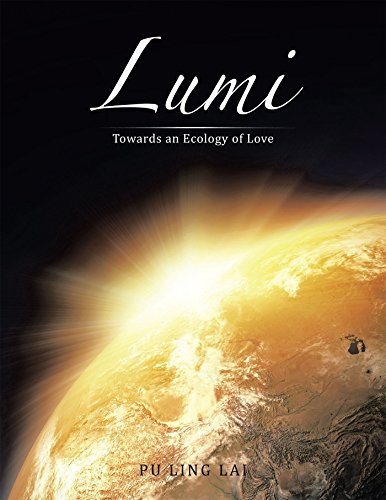
Lumi: Towards an Ecology of Love, by Pu Ling Lai

Ebook PDF Online Lumi: Towards an Ecology of Love, by Pu Ling Lai
Who am I? What do I want? What is the deeper purpose of my life on Earth? How to flow with our true nature so that we can live an effortless and fulfilled life? These are the questions that the author keeps asking herself every day. After long soul-searching and various experiences, one simple answer pierces through the fog of mind and sheds light on her heart: LOVE. Following the mystic dialogues between Lumi (a female voice) and Lux (a male voice), with a ray of light that travels through time and space, this book invites us on both a personal and collective journey of love between humans, animals, and nature, in which we might find answers of our own questions—or rather, more questions. For those who wish to learn to love oneself and others better, this book is delicious—simple yet deep with wisdom that readers aged from eighteen to eighty-eight can find resonance and insight in her/his own journey of awakening.
Lumi: Towards an Ecology of Love, by Pu Ling Lai- Amazon Sales Rank: #2102095 in eBooks
- Published on: 2015-03-03
- Released on: 2015-03-03
- Format: Kindle eBook
About the Author Ling is a daughter of universe, mother of a miraculous baby, and wife of a Bohemian. After 20 years in China as a silent rebel, she left home and roamed in Europe while studying literature and searching for 'herself' She later drifted to MSc in Holistic Science in Schumacher College, where she embarked on a grandiose pilgrimage of love.

Where to Download Lumi: Towards an Ecology of Love, by Pu Ling Lai
Most helpful customer reviews
0 of 0 people found the following review helpful. adventurous By Ling Martha Blassnig:This book develops an approach toward the evasive and underdeveloped topic of love through an engagement with its close relationship with light, reminiscent of the work by J.W. Goethe who tackled both these aspects culminating in his Theory of Light that he conceived as his greatest life-time achievement. As the dissertation reveals, the topic of “love” pertains largely to the speculative domain in most fields of the sciences with exceptionally rare treatments, which is also apparent in the select references mostly deriving from philosophy or biographical contexts. As a consequence, the dissertation heavily relies on first-person experience, for which Pu Ling Lai chose an inventive rethoric of third-person perspective through the avatar “Lumi”, as a way of narrative distancing for self-reflection. The dissertation is written in form of a dialogue between “Lumi” (the author’s avatar) and “Lux” (being of/in/as light). This conversational, in places elegantly literary, style is not without precedent in speculative science, which was discussed during the tutorials (e.g. Camille Flammarion’s Lumen, 1887; Fox and Sheldrake’s Physics of Angels, 1996; Giulio Tononi’s Phi: A Voyage from the Brain to the Soul, 2012). The dissertation at its core addresses ontology in relation to science, in relation to the desire to know as intrinsic to human endeavour, and in respect of the importance of relationships. The dissertation rather originally proposes holistic science as a “caring” quality in the way of knowing the other (‘wisdom’), oneself (‘enlightenment’) and their relational potentialities for a greater whole, which makes a complementary and rather unique intervention to the established discussion of holistic science. Love in its many facets is ultimately understood as ‘receptive mode’, as ‘active absence’, in a paradoxical coexistence of indivisible individuality and at the same time relationship forming, obliterating capacity, opening up critical reflection and questions concerning polarity and dualism. The delicate handling of this co-existence of apparent paradoxes brings together insights from mysticism with scientific fact and seamlessly bridges discourses, disciplinary boundaries and paradigm conflicts through a multiple-perspective take, all of which share advances into approaching an understanding of the topic. It addresses these issues in the context of holistic science with a focus on aspects of cosmology, perception, (bio)photonics, theology, philosophy of science.The conversation between “Lumi” and “Lux” is not directed solely one-way (Lux teaching/ illuminating Lumi) but Lumi takes over in the intersecting reports of workshop experiences by elaborating the topic of the dissertation through reflections on field- and first-hand experiences. This reporting of applied practices, ‘field eco-therapy’, ‘vision quest’ and ‘horse-whispering’, starts on page 36 and continues to the end of the dissuided by ‘Lux’ asking questions and ‘Lumi’ turning into the ‘teacher’. In this way the dissertation shows a pathway of the author in finding and developing her own ‘voice’ through the writing process. It is insightful throughout with intersected referencing from a wide range of literature. The dissertation is ad-mirable in courage and sustained consistency in thetreatment of the in the beginning clearly formulated research questions on the nature and improvement of love. A particular strength of the dissertation lies in its sustained momentum that strives to present a vivid account for the lived experience driven by the desire to connect and understand the nature of relationships as its key focus of study. The dialogic format enables a contingent fluidity in the uttered ideas as a way of a phenomenologically rich, enacted communication that draws the reader into the content as co-constructing participant. Pertinent with the very topic of research and the dynamic interrelationship between love and freedom, light and illumination, the here presented account defies permanent fixation or closure/conclusion in both understanding and treatment. A particular virtue lies in the way that the discussion is intrinsically inquiry-driven and moves beyond disciplinary boundaries and discoursive fields. In doing so it identifies, develops and calls for an awareness and engagement with the presented insightful aspects and concerns that emerge from this experiential and experimental inquiry. Overall it is an impressive experimental and courageously communicated journey that carries the ‘quest’ into the topic of love from the beginning to the end without losing its key thread, direction and passion. What gets somewhat lost or diverted toward the end is the topic of light (apart from the continuous entanglement of Lumi and Lux) and it might have been rather insightful to conclude the epilogue with a summary or synthesis of the dance between light and love throughout the thesis (and perhaps indications for future directions). The richness of the presented materials, especially the rich and moving accounts of the field experiences and case-studies, asks for further research and engagement with this topic, which, following the impressive spectrum of primary and secondary sources, could potentially lead into inquiries from a diverse range of relevant disciplinary, professional and practice-related fields concerned with the “sciences of life”. It is a timely topic, urgently in need to be addressed not only on conceptual level, but, as this dissertation insightfully and with much soul and vivid spirit demonstrates, through ontological engagements with light and love as they pertain tothe very foundations of what it means to be alive and to be human. Given the profound insights and the high level of integration of holistic thinking in the applied experiential reflections on the chosen topic, the dissertation deserves recognition as an excellent piece of work with particular originality and relevance for the discourse of ‘holism’ that aims to be integrative of all domains of life experience. Part of its strengths lies in the attention given to the aesthetic dimensions of the addressed topic both in layout, choice and inclusion of visual materials. Summary: Strong and confident in insightful, independent and very original approach to a topic that is under-researched and rarely discussed. Aesthetic and ethical sensibility, intellectual flexibility and adventurous experimental spirit.Phillip Franses, holistic science tutor :In this thesis Ling shows great resolve to ask a real question of herself and the world and to come to the maturity of a real answer.
0 of 0 people found the following review helpful. Trust, that the universal force will eventually bind everything together By Barbara Schiele What a lovely book! The author has found a way to combine a deep conversation on the universe, the being and the various aspects of love with humor.For example, Lux explained Lumi about the beginning of the universe - as chaos - and Lumi tried to understand it by comparing it with the beginning of writing her dissertation. She has the urge to organize it, but it didn't work that well. So finally, when she got the point, Lux concluded: "Life emerges in relationships with each other, rather than appearing one after another according to a fix plan. Therefore, you should not make a table of contents in your dissertation but let it take on life of its own."I really enjoyed this kind of comparisons. It is so common to think that spiritual thoughts can't be adapted into everyday's life with everyday's problems. But maybe that is the transformation journey, that everyone of us is facing sooner or later.If you are interested in some spiritual thoughts, but don't want to start with long, complicated 'theories', this might be exactly what you should read!
See all 2 customer reviews... Lumi: Towards an Ecology of Love, by Pu Ling LaiLumi: Towards an Ecology of Love, by Pu Ling Lai PDF
Lumi: Towards an Ecology of Love, by Pu Ling Lai iBooks
Lumi: Towards an Ecology of Love, by Pu Ling Lai ePub
Lumi: Towards an Ecology of Love, by Pu Ling Lai rtf
Lumi: Towards an Ecology of Love, by Pu Ling Lai AZW
Lumi: Towards an Ecology of Love, by Pu Ling Lai Kindle

Tidak ada komentar:
Posting Komentar